Automation is exploding… but AI agent autonomy is nowhere near enterprise-ready
We’re seeing the rise of agents capable of coding, testing, deploying, documenting, and orchestrating entire workflows.
It’s impressive… but often unmanageable.
When you ask an agent for the time, it might:
- spin up a sandbox
- recompile the Linux kernel
- write a Python script
- fetch the system time
- convert it to the correct timezone
- generate a PowerPoint
- build a website, host it, and upload the PPT…
… all that just to say “It’s 2:07 PM” — which is wrong, because you’re in Australia. 😅
👉 The power is there. The control is not.
The real need: guided AI, not freestyle AI
In a business environment, the real questions are:
- Can I predict what the agent will do?
- Can I control it?
- Can I audit it?
Organizations need:
- ✔️ stability
- ✔️ repeatability
- ✔️ logs
- ✔️ guardrails
- ✔️ clean integration to sync properly with enterprise systems
Not a process that improvises a new path every time it runs.
The future belongs to orchestration
Agents should not be fully autonomous — they must be guided and orchestrated.
The orchestrator becomes the backbone of the system:
- structuring
- pacing
- validating
- securing
- versioning
- syncing with the information system
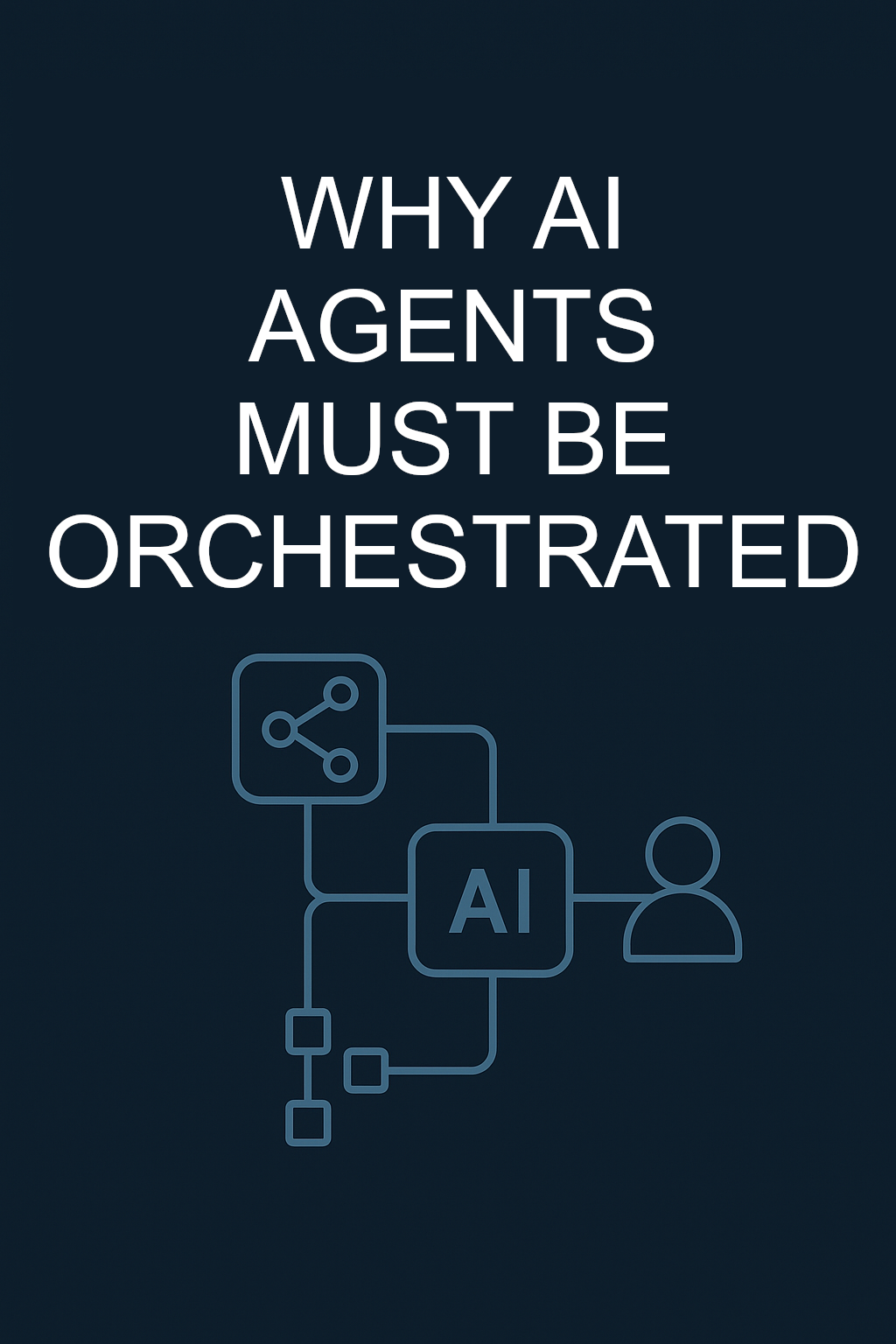
👉 The orchestrator drives and controls.
👉 The agent executes.
👉 The human supervises.
This is the only trio that works reliably in production.
Conclusion
AI agents give you the firepower of a 10-developer team… if you keep them under control.
The future is guided, orchestrated, and predictable AI, serving people and organizations.
Warm thanks to Christophe Colardeau for our conversations on the topic, always inspiring 👍